

The Data Accessibility Challenge
Modern banks operate across multiple systems – from core banking and CRM to payments and compliance platforms. While these systems house valuable data, the inability to access this information quickly and efficiently creates bottlenecks in decision-making and customer service delivery.
Traditional data architectures, despite their robustness, often struggle with:
Real-time data access across distributed systems
Unnecessary data duplication
High maintenance costs
Complex compliance requirements
Integration challenges with fintech partners
Data Virtualization: The Strategic Solution
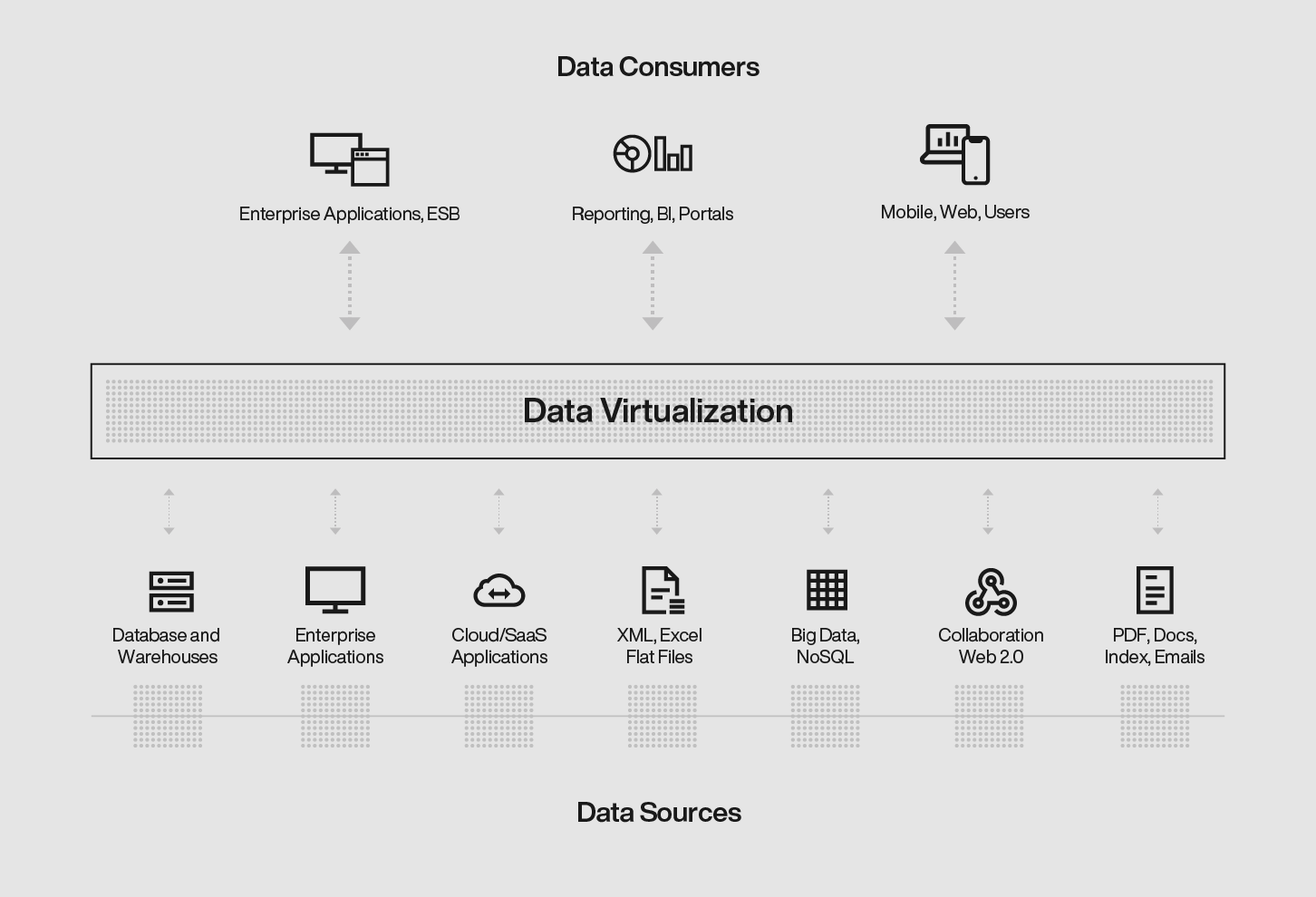
Data virtualization emerges as a transformative solution, enabling banks to create a unified data access layer without the need for physical data movement or replication. This approach revolutionizes how financial institutions manage and utilize their data assets.

Key Architectural Components
Multi-Tiered Architecture (Platinum-Gold-Bronze)
Structured access to both real-time and archived data
Optimized storage and retrieval based on data usage patterns
Efficient resource allocation across different data tiers
Real-Time Processing Capabilities
Low-latency query processing for critical operations
Enhanced AI-driven fraud detection systems
Real-time credit risk assessment and analytics
Regulatory Compliance Framework
Automated compliance monitoring and reporting
Built-in support for GDPR, PCI-DSS, and Basel III requirements
Secure, role-based access control mechanisms
Open Banking Integration
API-first architecture for seamless fintech integration
Secure data sharing capabilities
Standardized data access protocols
Measurable Business Impact
Implementation of data virtualization delivers significant, quantifiable benefits:
Operational Efficiency
30% acceleration in decision-making processes through AI-powered analytics
Substantial reduction in cloud storage costs
Elimination of redundant data storage
Customer Experience
Real-time personalization capabilities
Instant fraud detection and alerts
Enhanced financial advisory services
Improved customer satisfaction through faster service delivery
Regulatory Compliance
Streamlined compliance reporting
Automated audit trails
Enhanced data governance
Reduced compliance-related operational costs
Future-Proofing Banking Operations
As the financial services industry continues to evolve, data virtualization becomes increasingly critical. Banks that implement this technology gain significant advantages,
Enhanced Agility
: Faster response to market changes and customer needs
Improved Innovation
: Easier integration of new technologies and services
Cost Optimization
: Reduced data management and storage costs
Better Risk Management
: More accurate and timely risk assessments
Implementation Strategy
For banks considering data virtualization, we recommend a phased approach:
Assessment of current data architecture
Identification of high-priority use cases
Pilot implementation in selected departments
Gradual rollout across the organization
Continuous monitoring and optimization
Conclusion
Data virtualization represents more than just a technological upgrade—it’s a strategic imperative for banks aiming to compete in an increasingly digital financial landscape. By enabling real-time access to critical data while maintaining security and compliance, data virtualization helps banks deliver the agile, personalized services that modern customers demand.
The future of banking lies in the ability to harness data effectively, and data virtualization provides the foundation for this transformation. Banks that embrace this technology now will be better positioned to lead in the era of digital financial services.